T&S was recently featured in an article by Golf Bizz Review. Click here for the original article or read on below.
A member checks his bag in Charlotte on a Tuesday and collects it in Edinburgh on Wednesday morning. By Thursday it is on a trolley at a course he waited four years to play, alongside three strangers who will spend the round working out who he is. Nobody asks. The answer is hanging off the zip.
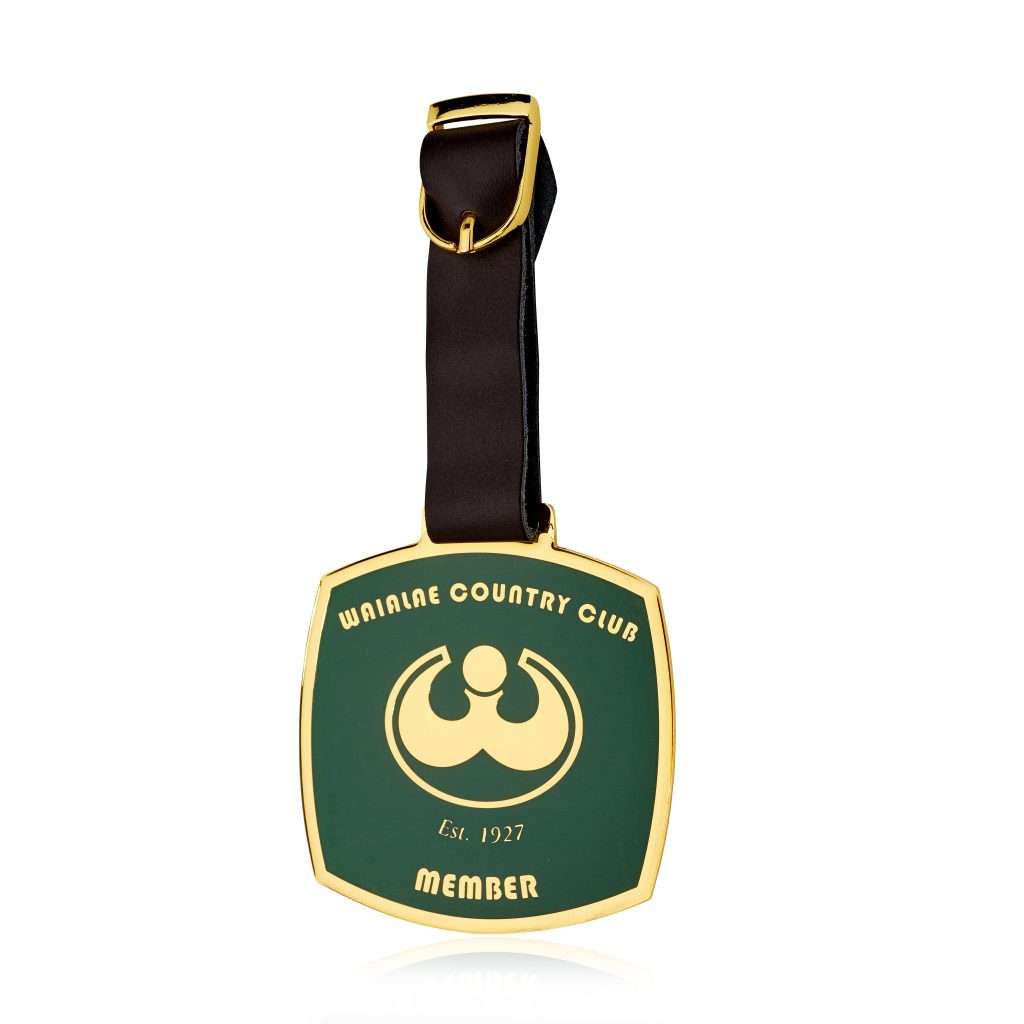
That tag is the only piece of the club that made the trip. Everything else the club spent money on this year stayed at home: the greens, the terrace, the new range mats, the chef. All of it works on people who are already members or already visiting. The insignia is the single asset that leaves the property and introduces the club, an ocean away, to people who will never set foot on it.
Most clubs have never thought of it in those terms, because the tag arrives on an invoice filed under merchandise.
The club in June’s piece did, and it has a number to show for it. After raising the standard of its own insignia, that club sold 800 bag tags to its own members. Eight hundred people who already belonged paid for the right to carry the crest somewhere else.
Nobody needs a $45 tag to tell his clubs apart. What the member is paying for happens in a car park in another country. Golf is unusual that way: the sport built a culture in which people voluntarily advertise the institution that charges them dues, and they do it at their own expense, on their own holiday.
Which means the object has a job the club never specified. It goes out and represents the place among strangers, in close-up, for years.
Now price it. A T&S bag tag runs around $45, with the premium pieces between $50 and $55. The volume alternative costs about $10 to produce and reaches the club at $20 or $30, and the margin on it is healthy. On 800 units the gap is real money, and a club treasurer will find it on the spreadsheet in a second.
What the spreadsheet does not show is year three. Printed epoxy under a plastic dome yellows in the sun. On soft enamel the color sits proud of the metal, and the edges are the first thing to go. The member notices before anyone else does, and quietly stops putting it on the bag. A tag that comes off the bag has stopped doing the only job that mattered, and the club is no longer in that car park in Scotland.
Hard enamel is what changes the arithmetic, and the process belongs at a jeweler’s bench. Glass powder is fused into recessed metal at close to 800 degrees Celsius, applied by hand, fired, then ground flush with stone or diamond abrasives and polished. Nothing sits on the surface to lift or chip. T&S Medals and Insignia has been doing it for forty years, and has held the contract for the Order of Australia, the country’s highest civilian honor, since 2000. The same benches have made pieces for two members of the British royal family, King Charles III and the late Prince Philip, and for Bill Clinton.
“You can’t automate the feel,” says Chris Wilkins, the company’s chief executive and the son of the couple who started it on a kitchen table in Sydney in 1985. “When you hold a piece of genuine hard enamel, your thumb knows the difference instantly. It feels like currency. It feels like value.”
Currency fits what the June club found. Its members wanted to own the thing and paid for it, and now the crest is on 800 bags that go wherever those members go.
A club handing out the disposable version pays $20 a member for an object that spends a fortnight on a bag and the next decade in a drawer. It also gives up the only advertising it owns that walks onto other people’s first tees by itself.
Somewhere this weekend, on a tee at a course three time zones from home, a stranger will glance at a bag tag and form an opinion about a club he has never seen. That opinion was settled on a purchase order, by a committee that thought it was buying merchandise.